Weekly #01 · 11 pages · 11.10.2026Czytaj po polsku
SATIRICAL WEEKLY · #01
WRYCUT
Reality, lightly edited.

The Manual of Certainty

Everything is known. Except the outcome.

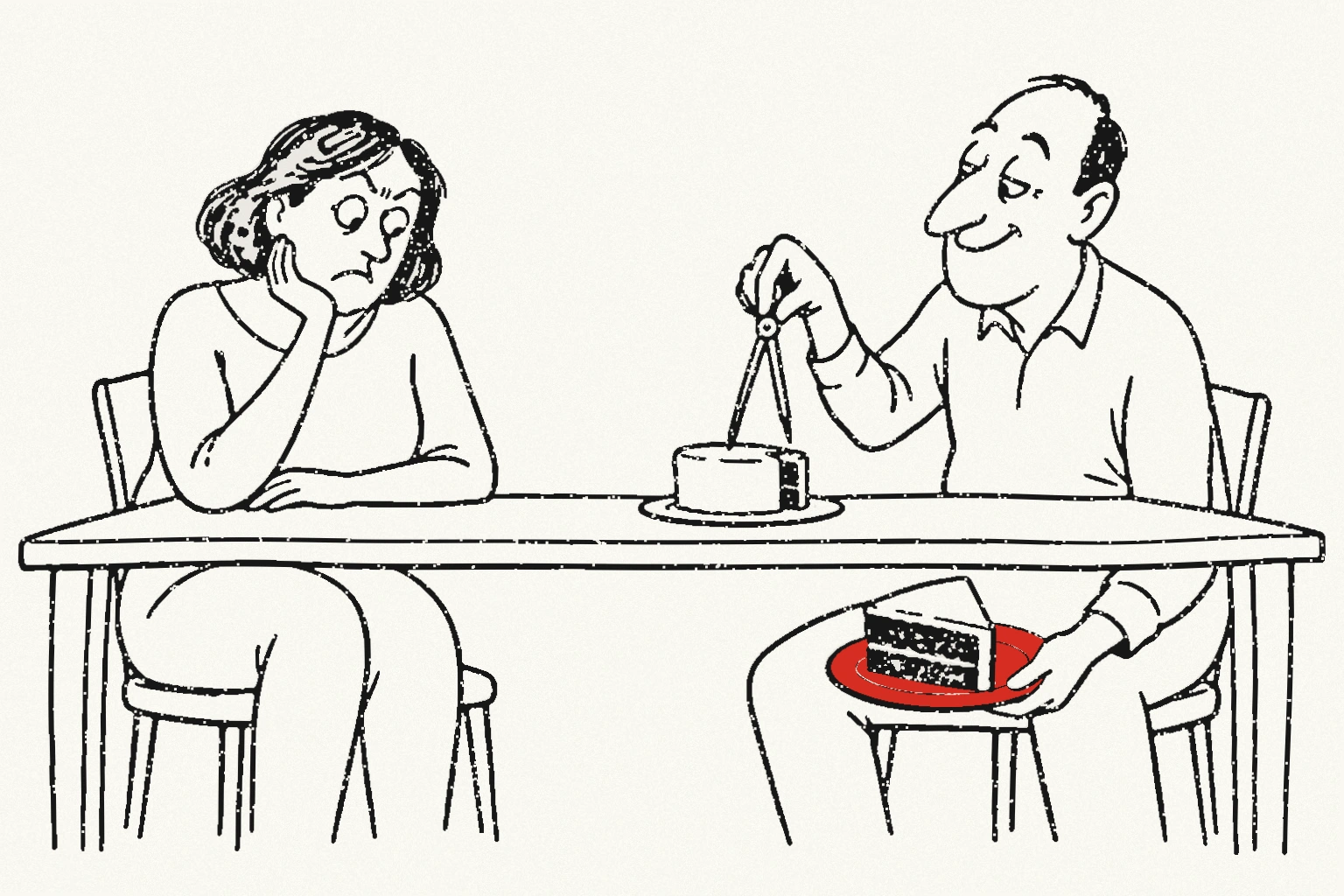
A man measures a tiny cake slice with a compass while hiding a huge piece on a red plate below the table; a woman watches the hidden plate.
Equal portionsWRYCUT
FIRST CUT

Certainty no longer needs evidence. It needs support: a chart, a podium, good lighting. In this issue a bus spoils the statistics, Roman refuses to surrender the last word, and a traveller pays to visit somewhere nobody visits. The real week provided instructions too: how to award a medal with one hand while suspending applications with the other, how to choose an opponent, and how to sell fewer cars with greater conviction. Between the news we visit a laboratory, a camera and a dining table. We have checked the facts. The certainty is yours.

THE WEEK · POWER AND MARKETS

Everything under control

Two doors to the White House

FACTOn October 8, the US administration suspended Microsoft from PERM, a programme for employer-sponsored permanent-residency applications. Trump awarded Satya Nadella the National Medal of Technology and Innovation that same day. Microsoft says 80% of its H-1B filings last year concerned existing staff, rather than new hires.

CUTFictional exchange: “Does Microsoft meet American standards?” “Are we issuing a permit or a medal?”

Source and dates
AP / White House / Microsoft · 08.10.2026 ↗Further source 1 ↗Further source 2 ↗Event: · Source published: Checked:

A permanently fitted customer

FACTOn October 7, UOKiK announced a PLN 21,475,000 penalty against Nasz Prąd over 21 unfair contract terms. One allowed the heat pump’s capacity and price to change after signing without guaranteeing a right to cancel. The decision is not final and can be appealed.

CUTThe pump’s capacity and price could change. Only the customer had to remain permanently fitted.

Source and dates
UOKiK / Gazeta.pl · 07.10.2026 ↗Further source 1 ↗Event: · Source published: Checked:

Choose your opposition

FACTOn October 8, MLB proposed a 154-game regular season from 2029, longer Division Series and allowing higher seeds to choose opponents in the first two playoff rounds from 2027. The players’ union will respond in bargaining; the rules have not been adopted.

CUTFictional exchange: “Who do you want to beat?” “Show us the catalogue first.”

Source and dates
AP / MLB · 08.10.2026 ↗Further source 1 ↗Event: · Source published: Checked:

A question for the search engine

FACTOn October 5, Poland’s competition authority accused four Google-group companies of potentially abusing market dominance in negotiations with publishers. It says publishers lacked data needed to check how payments for their content were calculated. Google says it uses a uniform model and has signed deals with over 20 Polish publishers.

CUTFictional exchange: “How did you arrive at that rate?” “Please don’t ask the search engine questions.”

Source and dates
UOKiK / Google response via PAP–Money.pl · 05.10.2026 ↗Further source 1 ↗Event: · Source published: Checked:

Increasingly exclusive

FACTOn October 9, Porsche reported 178,532 deliveries for January–September, down 16% from a year earlier. Deliveries in China fell 33%, while the 911 rose 12%. The company maintains its value-over-volume strategy and plans to expand more exclusive variants.

CUTA little more exclusivity and the rarest model will be a customer.

Source and dates
Porsche / Reuters · 09.10.2026 ↗Further source 1 ↗Event: · Source published: Checked:
An open black padlock whose shackle is joined to the body only by a thin red ceremonial ribbon and bow.
Ceremonial securityWRYCUT
THE WEEK · BUSINESS AND DAILY LIFE

Results sold separately

Connecting people

FACTMeta confirmed to Reuters on October 8 that it is blocking ByteDance advertisements and campaigns linking to TikTok and other ByteDance properties in the US and six other countries. Its spokesperson cited competition for users. An advertising ban is not a ban on using TikTok.

CUTMeta connects people. Outgoing connections to the competition are unavailable.

Source and dates
Reuters / Meta spokesperson / Marketing-Interactive · 08.10.2026 ↗Further source 1 ↗Event: · Source published: Checked:

A $350 million alarm

FACTOn October 8, the OCC fined American Express National Bank $350 million over inadequate anti-money-laundering controls. It identified roughly $13 billion in suspicious activity over a decade that the bank failed to properly identify, evaluate and report. American Express says it will continue improving compliance.

CUTThe alarm’s sensitivity was apparently set to $350 million. It sounded when the fine arrived.

Source and dates
OCC / Federal Reserve / Reuters · 08.10.2026 ↗Further source 1 ↗Further source 2 ↗Event: · Source published: Checked:

Stable, if you are already in

FACTOn October 8, the US Labor Department reported 197,000 new unemployment-benefit claims for the week ending October 3, seasonally adjusted: 2,000 fewer than the revised previous week. AP describes a market with few layoffs and sluggish hiring. Few layoffs do not mean easy entry into a job.

CUTFictional exchange: “Are you hiring?” “We aren’t firing.” “Is that good news for me?” “If you already work here.”

Source and dates
US Department of Labor / AP · 08.10.2026 ↗Further source 1 ↗Event: · Source published: Checked:

Triumph, pending approval

FACTOn October 8, Arlington County’s board sued federal agencies over Trump’s proposed triumphal arch at Memorial Circle. It seeks to halt work until a full environmental review is completed. A lawsuit is not a judgment; the Interior Department says it is following the law.

CUTWhether the arch will stand is still undecided. Who gets to walk through as the victor has already been settled.

Source and dates
Filed complaint / AP / Washington Post · 08.10.2026 ↗Further source 1 ↗Further source 2 ↗Event: · Source published: Checked:

A buying reflex

FACTOn October 5, TikTok unveiled Buy Direct and Shopping Assistant at Advertising Week. The former promises one-click brand purchases inside the app; the latter guides a conversation about product choices. This is a product announcement, not proof of universal availability or effectiveness.

CUTSatirical notice: we shorten the journey from “I like that” to “When did I buy that?”

Source and dates
TikTok Newsroom / The Keyword · 05.10.2026 ↗Further source 1 ↗Event: · Source published: Checked:
A red eye looks out at the reader from a solid black keyhole silhouette.
Privacy protectionWRYCUT
LONG FORM · INSTITUTIONAL SATIRE

The first bus to spoil the statistics

Stefan found a working vehicle. Getting permission to carry people proved more difficult.

Original WRYCUT fiction. The town, operator, people and report are invented; this is not an account of a real incident.

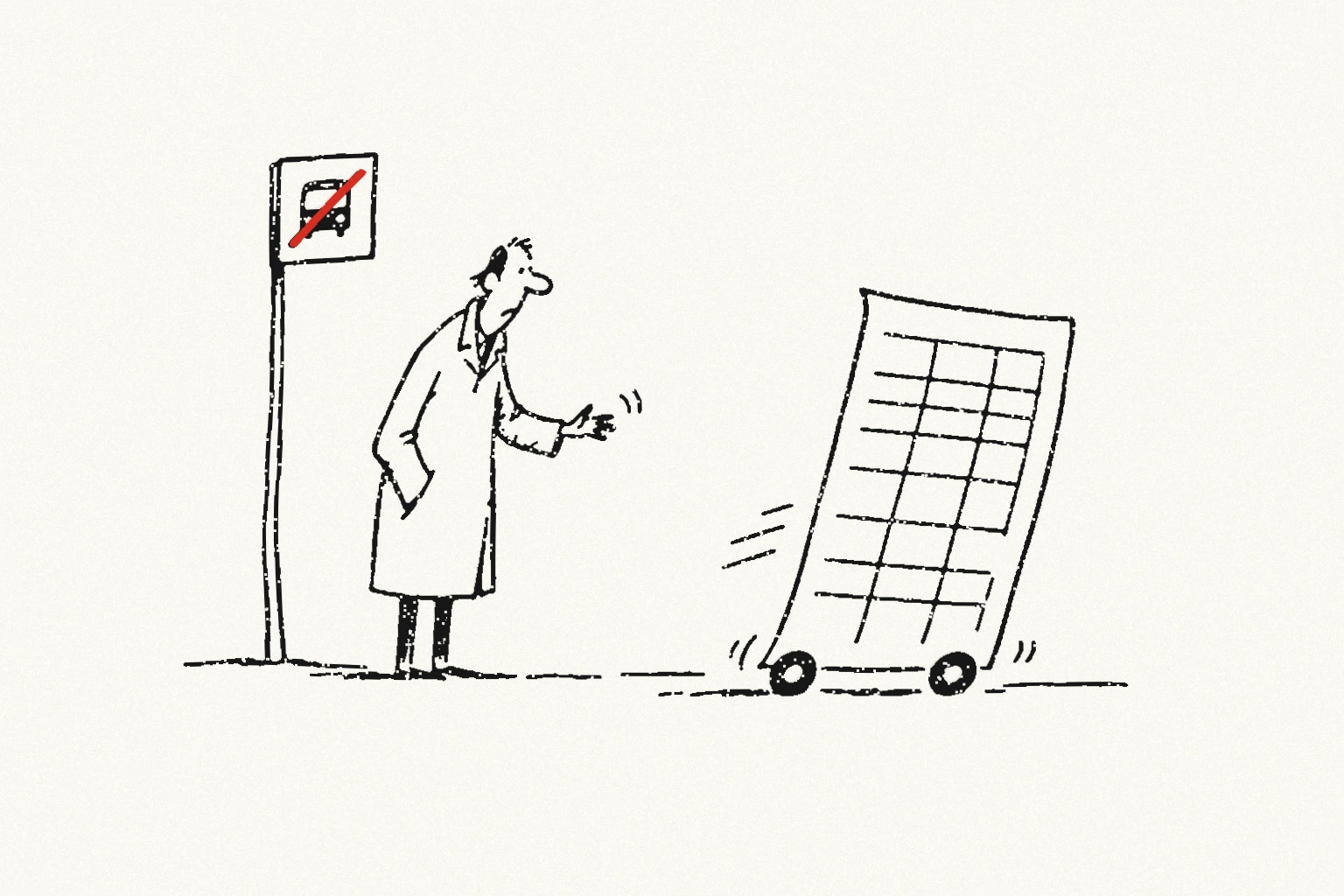
A passenger waits beside a crossed-out bus sign as a timetable rolls away on two wheels in place of a bus.
Running to scheduleWRYCUT

In a certain town, the bus service achieved one hundred per cent punctuality. The announcement was made at the depot, between two buses. Both were clean, fuelled and exceptionally well suited to public appearances. Not a single late arrival had been recorded during the last quarter. No on-time arrivals had been recorded either, but that was not the subject of the press conference.

The chief executive displayed a green chart. He waited for the photographers to finish, then explained that service quality was now visible at a glance. A local radio reporter asked where passengers could see it.

“On our website,” he said.
“What about at the bus stop?”

“We’re working on QR codes.”

Stefan, a driver, had nothing against charts. He would have been happy to look at them after work. For three months, however, he had come to the depot exclusively for training: first in saving fuel, then in reducing wear, finally in preventing complaints. Every target had been met. The bus beside the wall used no fuel, suffered no wear and admitted no dissatisfied customers.

On Wednesday, Stefan checked the engine, brakes and heating. Everything worked. Permission to leave was harder to get started. The dispatcher asked for a business case.

“People are standing at the stop.”
“How do you know they want to travel?”

“They’re beside the timetable.”

“They might be reading it.”

Stefan went to ask. He found a woman with a bag, a man with a book and a man with no identifying prop at all, because he simply wanted to go home. All three confirmed their intention to travel. The woman added her work address. She did not want her presence to be mistaken again for an interest in transport history.

The dispatcher examined the signatures. Could they be collected electronically? Stefan said the passengers were waiting. She suggested collecting them again at a convenient time. He realised that continuing the conversation would amount to another training course.

He drove out. At the first stop the woman boarded cautiously, as if entering a building newly reopened after repairs. She asked whether the bus really went into town. Stefan said it did. The man with the book sat by the window and intended to do nothing that required an efficiency assessment.

They picked up several more people. One searched for a ticket; another asked whether this was a normal service. Stefan waited for a passenger running towards the stop. He reached the terminus eight minutes late. The woman got off near her workplace. The reader went to the library. The third passenger reached home. These outcomes were hard to fit on a single chart, since they all ended in different places.

That afternoon Stefan was summoned to a meeting. The quality director printed a table and laid it in the middle of the desk.

“We have our first late arrival.”
“We have our first arrival,” Stefan said.

“Please don’t confuse the issue.”

The cause of the delay was quickly established: the vehicle had stopped at bus stops. The director asked who had authorised this route. The dispatcher pointed to the timetable. The timetable could not be summoned to a meeting, so a working group took responsibility for it.

The chief executive did not want to punish Stefan. He valued initiative when it could be separated from its consequences. After an hour, the journey was reclassified as a demonstration of passenger-carrying capability. Demonstrations were excluded from the statistics. The green chart became solid green again.

Stefan received a certificate and an invitation to the quarterly awards ceremony. He was also asked to make another journey the following day: bringing the guests from their hotel to the depot. The list included the chief executive, the quality director and the author of the complaint-prevention programme.

“Another demonstration?” he asked.
“No. Transport for delegates. Please be punctual.”

The next morning the bus drew up outside the hotel. The quality director appeared eight minutes late. Stefan waited until he saw him before closing the doors.

“Thank you for waiting,” the director said as he sat down.

At the depot, awards were presented for punctuality. Stefan stayed in the bus. He was waiting for the committee to come back.

LONG FORM · A COMEDY OF CHARACTER

Roman leaves the last word behind

He had never lost an argument. That evening he checked who still wanted a conversation.

Original WRYCUT social fiction. The characters and conversations are invented.

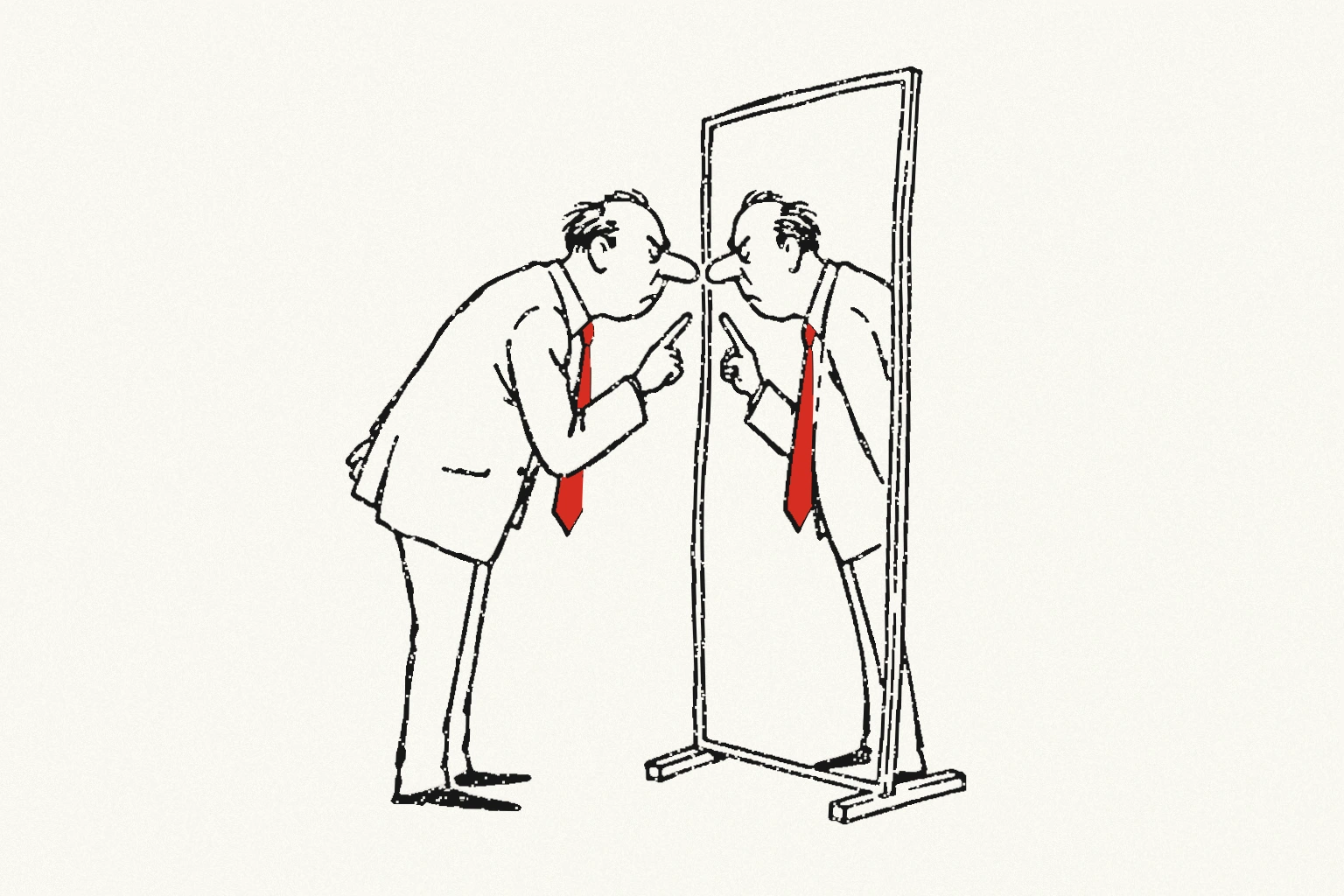
A man in a jacket and red tie wags a finger at his reflection in a freestanding mirror; the reflection returns the gesture.
Expert panelWRYCUT

Roman never began a sentence with “I think”. That would be unfair to the other person: why make somebody guess when you could tell them exactly how things stood? For the same reason, he never asked whether anyone wanted his opinion. Once he had formed it, keeping it to himself would be inconsiderate.

On Monday morning he told his wife that he would not need an umbrella. There were clouds outside, but Roman knew the difference between clouds and rain. He returned soaked. His wife handed him a towel.

“I told you to take an umbrella.”
“You said it might rain. It might also not rain.”

“But it did.”

“We’re discussing what you said this morning.”

He hung his coat over the bath. The drops fell in an even rhythm. This was the only participant in the conversation whom Roman did not interrupt.

At the office he worked in accounts, though he devoted most of his time to correcting other people’s statements. A colleague said she had been waiting a week for an email reply. Roman explained that it had been six days since she sent it. She thanked him for the precision and went into another room. He considered the matter settled.

By the coffee machine a colleague described his building work. The contractors had promised to finish on Friday; on Monday they were not answering the phone. Roman immediately observed that no particular Friday had been specified.

“Do you still have your plumber’s number?” the colleague asked.
“First we need to establish whether a deadline has actually been missed.”

The colleague left without coffee. Roman stayed to explain the difference between a promise and a commitment to everyone else in the kitchen. Everyone else in the kitchen now consisted of the coffee machine. It raised no objections.

At lunchtime his daughter called. She was an adult, with a job and a flat of her own, but sometimes she still said “Dad” in a tone that asked him to stop being an expert for a moment. Another company had invited her for an interview. She was excited and frightened.

Roman listed seven risks. At the third she tried to add something, so he asked her to let him finish. By the sixth she had stopped trying. The seventh concerned people who made decisions based on emotions.

“I just wanted you to keep your fingers crossed.”
“That doesn’t improve your chances.”

“I know, Dad.”

She ended the call. Roman noted privately that he had managed to explain something after all.

That evening he went to a friend’s birthday party. The invitation said: “Come around seven. Cake later.” Roman arrived at six fifty-nine. His friend opened the door wearing an apron, with flour on one hand.

“You’re early.”
“I’m here around seven.”

“Well, come in and hold this bowl.”

“So you’re not ready.”

His friend handed him the bowl without answering. In the kitchen somebody was whipping cream, somebody was telling a story with no discernible beginning, and somebody had confused the birthday host with his brother. Roman began putting things right. The bowl went back on the counter. The guests moved to the sitting room, where the inaccurate story acquired an ending and made everyone laugh.

For a moment he stood in the doorway. He could have gone in and said the cake looked good. Instead, he pointed out that the candles did not correspond to his friend’s age. There were two missing, he learned. He proposed using one three times. Nobody had matches handy. The cake was eaten without resolving the matter.

At home his wife asked how it had gone.

“As usual. Nobody listened.”

She did not argue. This concerned him, so he supplied three examples. His wife put the plates in the dishwasher. Roman explained that not all of them could be arranged that way. She moved two, shut the door and went to read.

He stayed at the table and checked his phone. His daughter had written: “Interview went brilliantly.” He typed: “At this stage you only have your own impression.” Beside the message was her picture: she and a friend were both giving a thumbs-up. He deleted his reply. He wrote “Congratulations” and looked at the word for a long time. It required neither a qualification nor a follow-up.

He sent it. His daughter replied with a heart.

Roman got up and looked into his wife’s room.

“You know, I think I didn’t have the last word once today.”

She looked up from her book.

“I know.”

He waited a moment. Then he sat down. Victory stayed out in the hall.
LONG FORM · CUSTOMS AND TRAVEL

Nobody ever comes here

Tomas wanted to see local life. Preferably at convenient times, with no other visitors.

Original WRYCUT fiction. The location, travel agency and people are invented; the target is purchased authenticity, not residents.

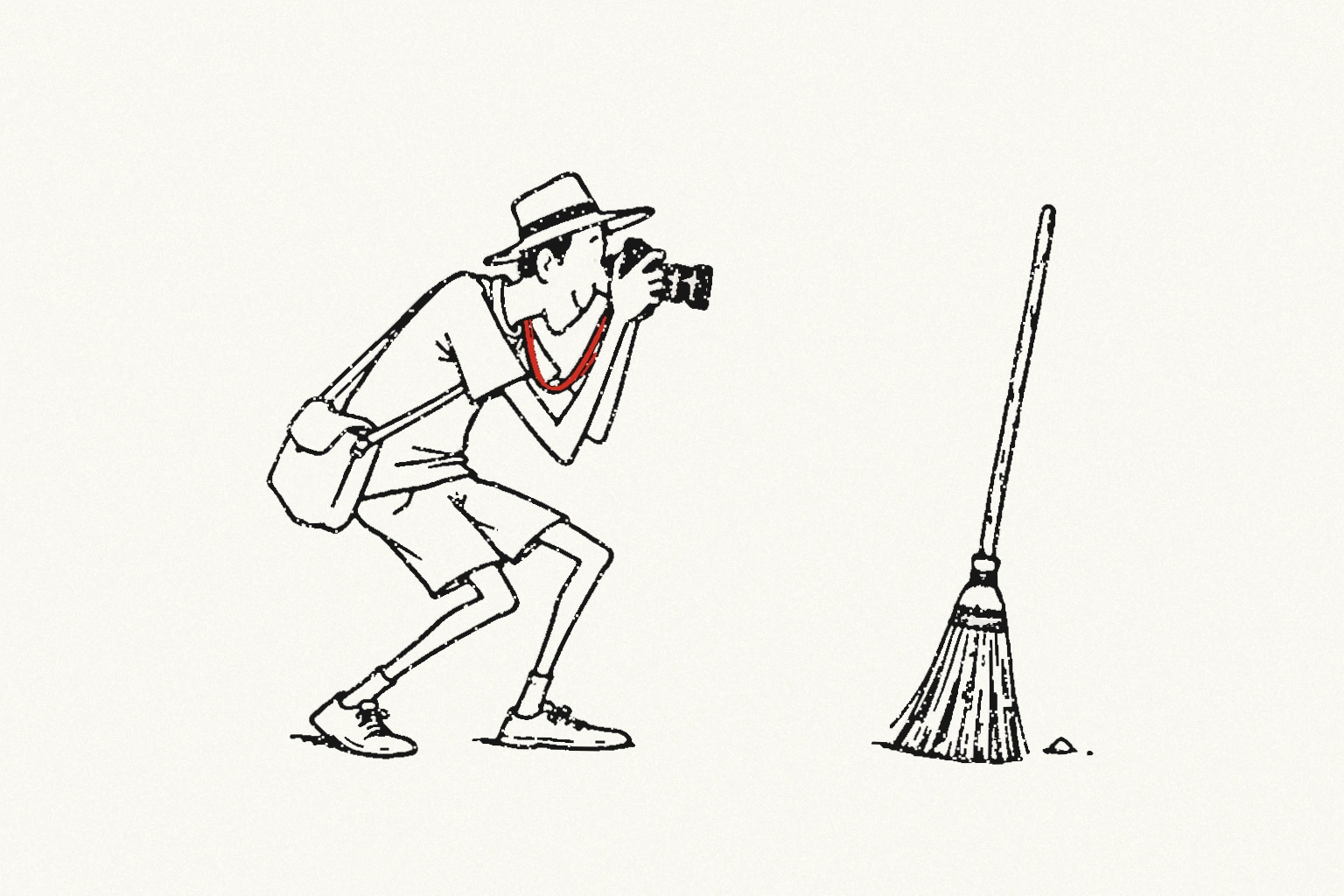
A tourist in a brimmed hat crouches with his camera in front of an ordinary broom and a tiny dust pile; his camera strap is red.
Like a localWRYCUT

Tomas could not stand tourists. They got in the way on holiday, especially when they photographed the same things he did. Last year he had to crop six people out of a view of a bay. After the cropping, half the bay remained. He captioned it “Extraordinary tranquillity” and decided never to return.

This time he found an agency promising to go where agencies never went. The offer contained no address. An address would give the place away. There was, however, a phone number, a price list and three levels of authenticity. He chose the middle one. The most expensive included no contact with a guide, which he could not distinguish from not paying anybody.

The guide waited outside the station. His name was Mark, he wore an ordinary jacket and he held no sign. Tomas took this as a good omen. A woman with a suitcase approached.

“The off-the-beaten-track tour?” she asked.

Tomas looked at Mark. The guide explained that they would be visiting individually, but together. It was easier to avoid groups that way.

They turned into a side street. They passed a bakery, a hardware shop and a tailor. Tomas asked to slow down. He wanted a photograph of a man carrying a ladder. The man put the ladder against a wall and went indoors. Tomas waited. Mark said he might not come out before evening.

“What’s he doing in there?”
“I don’t know. He’s at home.”

They entered a small café. There were two empty tables and a man reading a newspaper. Tomas asked whether locals came here. The owner said sometimes, if they wanted coffee. The custom was not especially picturesque, but Tomas ordered an espresso. He wanted to drink it the way people did here.

“Sitting down,” said the owner.

At the next table the woman with the suitcase was photographing her cup. Tomas waited for her to finish. He did not want somebody taking photographs in his photograph. The owner asked him to move his bag off a chair; her brother was due shortly. Mark smiled at Tomas. Contact with residents had been promised in the itinerary.

The brother arrived and asked for the cellar keys. He received them, took a sip of water and left. Tomas felt he had missed something. He had not even had time to ask how many generations the family had lived in the neighbourhood.

Behind the café they reached a courtyard. Washing hung on a line. Tomas put his phone away: this time he wanted to be present rather than merely to document things. Seven seconds later he took it out again. The distinction also needed documenting.

A woman leaned out of a window and called to Mark. He had forgotten to buy potatoes. The guide checked his watch. This was awkward: shopping was not on the itinerary, and his mother was now specifying the weight.

“Do you live here?” Tomas asked.
“Since I was a child.”

“Could we come with you?”

Mark agreed, provided they did not mind the shop. The woman with the suitcase stayed in the courtyard. Tomas went along. He stood in the queue, passed Mark a bag and held the door. Nobody looked at him. For the first time that day he felt he really was not a tourist.

On the way back Mark’s phone rang. His mother reminded him to collect the sheets from the laundry as well. Tomas immediately volunteered to help. He was given a white parcel. He carried it carefully; for a moment Mark looked like the guide to a man who had spent his whole life carrying sheets.

Back in the courtyard the woman with the suitcase asked Tomas to take her picture beside the washing line. He suggested that she help with the shopping first. It was the only way to get to know a place properly, he explained. She declined. Her package included a visit, not employment.

Mark’s mother came down to collect the bags. Tomas asked whether they could return tomorrow. He liked how unpretentious the place was. He did not even want to know what would happen: he was ready for a surprise.

“The bins need taking out tomorrow,” she said.

Mark began to apologise. Tomas stopped him with a raised hand.

“What time?”

They stepped away to agree a price. His mother stayed by the gate. She called after them not to get carried away. There were only two bags.

HISTORY · SCIENCE

Things that never read the manual

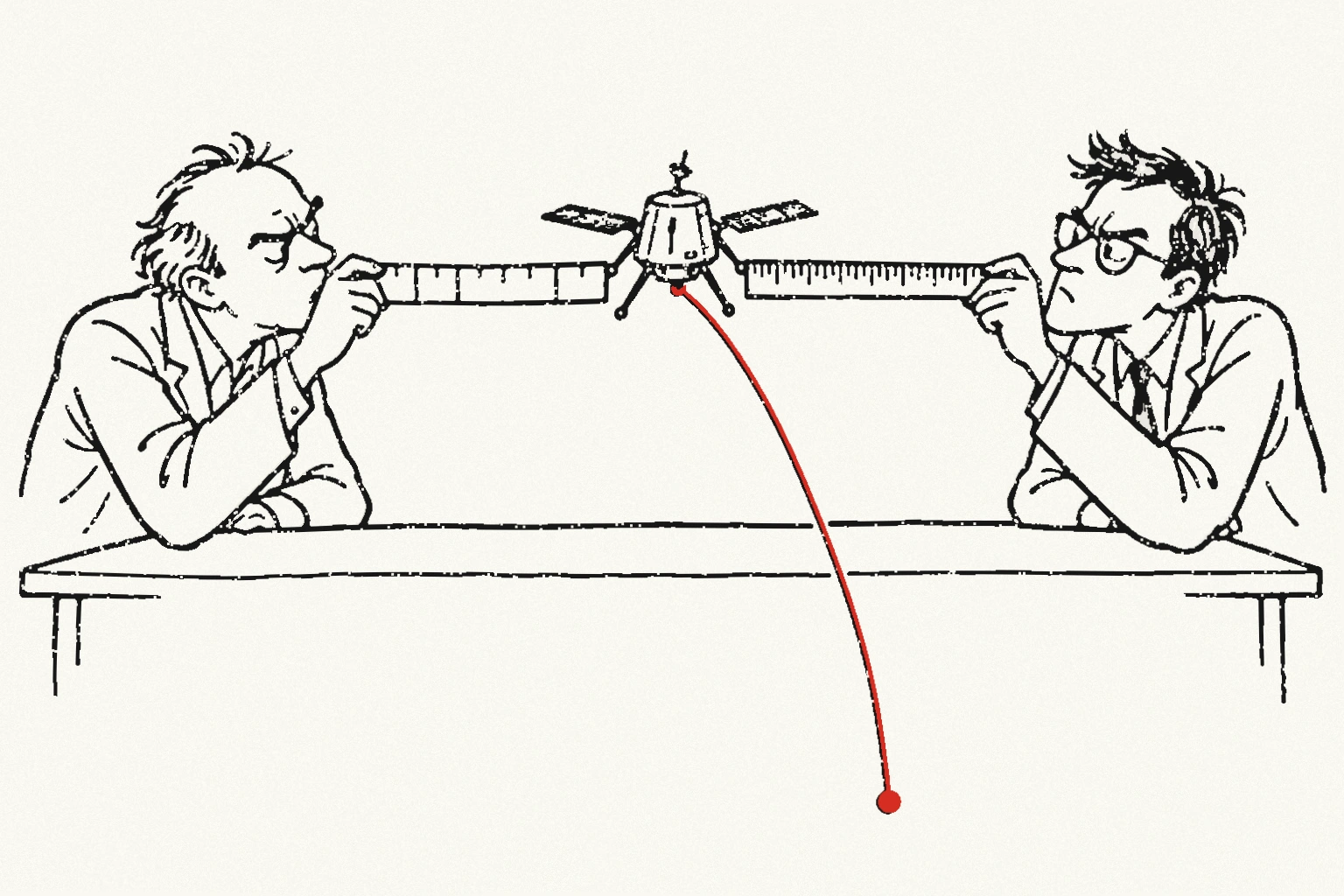
Two engineers measure a small spacecraft with differently divided rulers while a red trajectory drops below both measurements.
Both sides were rightWRYCUT

Mars did not read the specification

FACTNASA lost contact with Mars Climate Orbiter on 23 September 1999. The board’s 10 November report found that a ground-software file supplied impulse data in pound-force seconds rather than the required newton-seconds. The trajectory model assumed the specified units. The board also identified failures in communication, training and verification.

WRYCUT satirical miniature · fiction.

Imagine two rulers going to a meeting. Both are straight, both have neat markings, both come from reputable shops. One says the table is forty units long. The other agrees. The meeting ends in excellent spirits: at last, everyone has settled on a number.

Nobody has settled on the table. That is a secondary matter; the table has no role in the project. Someone spreads a cloth over it. Too short. A better cloth is proposed, then a bigger table. The least polished person in the room asks what one unit actually means. A silence follows of the kind reserved for questions everyone ought to know the answer to.

In this imaginary company, the person checking units would probably be regarded as a pedant. They would fuss over obvious things, delay dispatch and spoil the pleasure of two systems finally exchanging data. The data would pass through without error. The error would pass through with it.

The orbiter’s history is less comforting than a classroom story about one bad conversion. The report describes an entire working landscape: assumptions left untested, warning signs left unresolved and checks that failed to catch the mismatch. Nobody needed to discover new physics. Somebody needed to ask what the numbers were measured in.

The correct specification was already on the table. The one party never asked to sign off on it was Mars.

CUTThe number agreed. The planet did not.

Source and dates
NASA — Mars Climate Orbiter Mishap Investigation Board, Phase I report ↗Event: · Source published: Checked:

A drop with time to spare

FACTIn 1927, Thomas Parnell at the University of Queensland poured heated pitch into a funnel. Its stem was opened three years later; the first drop fell in 1938. The material looks solid at room temperature and can shatter, yet flows extremely slowly. The rate also depends on the surrounding temperature.

WRYCUT satirical miniature · fiction.

A person who believes everything takes too long can safely be placed beside this funnel. First they refresh the picture. Then they refresh it more often, so the material understands it is being watched. After an hour they check the internet connection. A pleasant task: the connection is something you can actually check.

By day two they have a plan to speed things up. A bigger screen, a sharper picture, a progress bar. The drop makes no use of these improvements. It hangs exactly as before. It cannot even have the decency to stop at ninety-nine per cent, which would at least allow suspicion to fall on the application.

On day three the observer picks up a hammer. This is the first proposal capable of producing a quick result. Unfortunately, that result would read: we broke the sample rather than wait for an answer. The hammer is put down. The funnel has won the round without visibly moving.

At some point the observer discovers their own viscosity. They are apparently free to leave, make tea, read something or call a friend. Instead, they have stuck to a screen on which almost nothing happens. A long-running experiment in the behaviour of matter has just acquired an extra sample.

The observer returns a week later. The drop is still on its way. This time they do not take the delay personally. They sit beside it and turn the phone face down. It is the first move they have made without trying to hurry the next one.

CUTThe drop is not stuck. The viewer cannot leave.

Source and dates
University of Queensland — Pitch Drop experiment ↗Event: · Source published: Checked:
TECHNOLOGY · CUSTOMS

Progress at the table

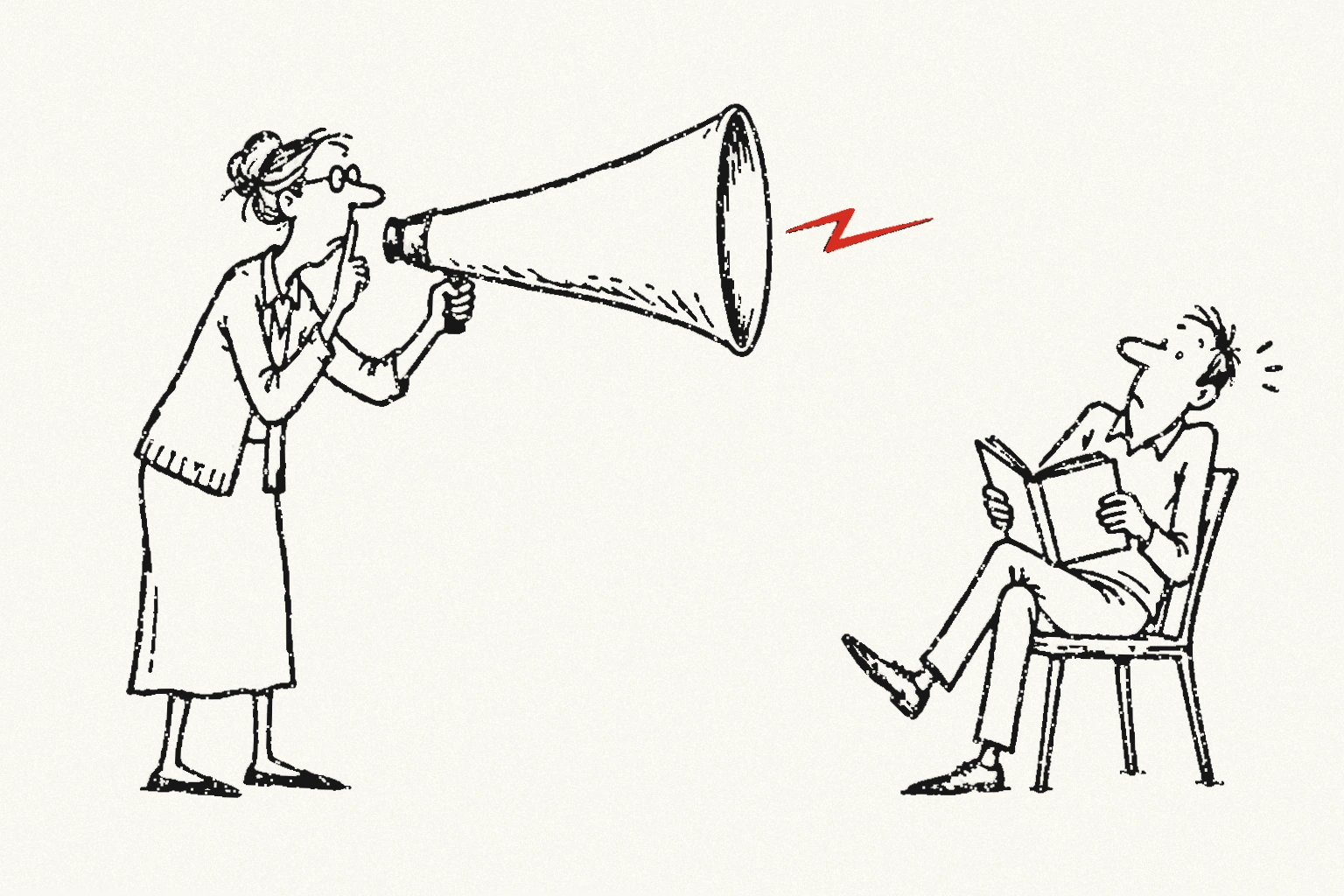
A librarian shushes a reader with a finger to her lips and an enormous megaphone; a single red zigzag marks its sound.
Quiet, pleaseWRYCUT

The world watches the pot

FACTIn late 1991, Cambridge researchers aimed a camera at a coffee pot and shared its image on their network to avoid fruitless trips for coffee. In November 1993, Daniel Gordon and Martyn Johnson connected the system to the Web. A participant’s timeline distinguishes the local camera from the later webcam.

WRYCUT satirical miniature · fiction.

The pot is surprised by the reach of its career. Yesterday it stood in a room. Today it has an audience. It still does much the same thing: contains coffee, or does not. It never thought such a modest repertoire could interest anyone except a thirsty person.

A spokesperson for the new medium asks about its mission. The pot replies with its capacity. Asked about its vision, it reveals the bottom. Asked about growth, it is refilled. From a media perspective, this is a difficult interviewee: every grand category is reduced to actual contents.

One viewer would like the picture to be more engaging. Another suggests teasers. A third proposes a premium series in which the coffee arrives earlier. They all care deeply about the pot, though none intends to walk over and wash it. That detail stays outside the frame.

A vast network was solving a problem so small that looking through a door could settle it. That is the charm of the history: somebody would rather not walk downstairs for nothing, and soon a person on the other side of the world can inspect their coffee pot.

The pot does not chase followers. It has a rare advantage over most contemporary screen personalities: once you have checked its contents, you know whether to stay. When empty, it does not extend the broadcast by promising a major announcement. Somebody simply needs to make coffee.

CUTThe whole world could see that somebody needed to get up and make coffee.

Source and dates
Quentin Stafford-Fraser / University of Cambridge — Trojan Room Coffee Pot timeline ↗Event: · Source published: Checked:

The sender pays for the idea

FACTThe Penny Black went on sale in London on 1 May 1840 and became valid for postage on 6 May. Rowland Hill’s reform introduced a low, uniform, weight-based rate paid in advance. Under the earlier system, the recipient usually paid, with charges depending on distance and the number of sheets.

WRYCUT satirical miniature · fiction.

Imagine that for one day the recipient also pays for electronic messages. Every request for a moment of attention arrives with a bill. You open your inbox and discover a world in which somebody else’s need to say something finally has a visible price.

The most expensive correspondent is a colleague writing to everyone to explain that they no longer need to write to everyone. Next comes a shop announcing an exceptional offer. The offer itself costs less than its three announcements. Finally, someone sends a long attachment, noting that only the first page matters. You wonder whether the rest can be left at the post office.

By afternoon, the reform must be reversed: the sender now pays. An unfamiliar silence settles. A message announcing that something is extremely urgent stops at extremely. Before pressing send, its author discovered that urgency was greater when somebody else was funding it.

In the evening a short letter arrives from a friend. No slide deck, nobody copied in. Two sentences that actually follow from one another. In our one-day experiment, the sender had to think for a moment about the weight of their own words.

I want to send you something, so I bear the cost of sending it. A modern recipient would happily keep that reversal of the old order. They take an envelope, attach a stamp and address it to themselves. Nothing inside is urgent. They have scheduled a quarter of an hour in which nobody wants anything from them.

CUTThe sender paid for the letter. The recipient was left only with the reading.

Source and dates
The Postal Museum — The first ever stamp: the Penny Black ↗Event: · Source published: Checked:

The fork meets good taste

FACTThe V&A describes Thomas Coryate’s 1611 account of using forks in Italy and the mockery he encountered after adopting the practice. It holds an English silver fork by Richard Crosse dated 1632–33. The Met notes that forks spread in England during the seventeenth century, while sets became common only in the eighteenth.

WRYCUT satirical miniature · fiction.

A new object appears at our imaginary table. It has a handle and two prongs. A guest uses it to lift a piece of meat. The host pauses the conversation: an event requiring judgment has occurred. He does not ask whether the meat is good. He asks why the guest cannot eat normally.

Normally means, of course, the way the host ate yesterday. The new object must establish its usefulness, decency and absence of hostile intentions. Fingers need establish nothing. They are local. They have years of experience, and nobody cares what they touched before dinner.

The guest tries to explain that lifting the meat is simply easier this way. The explanation is too modest. An object suspected of overthrowing the entire order of the table cannot defend itself with convenience. It ought to offer at least one grand idea that can be ceremoniously rejected.

After dessert the host is alone. He turns the fork in his hand. It really does pick things up. He puts it down at once: he has conducted an experiment, not changed his beliefs. The next day he would like to check the result again. He asks the servant to place the curious thing beside his plate, strictly on a trial basis.

Our host lives wherever yesterday’s familiar finger passes for an argument. In time he will give dinners with matching cutlery and frown at guests who do not know the correct fork. Innovation will have become tradition. The prongs will be much the same.

CUTToday we laugh at the fork. Tomorrow, at whoever holds it wrongly.

Source and dates
Victoria and Albert Museum — An A–Z of metalwork, N is for Novelty ↗Event: · Source published: Checked:
SHORT FORMS · I

A pocket dictionary of grand intentions

Original WRYCUT satire. Dialogues and notices are editorial fiction, not authentic quotations.

Dialogue · fiction

The original

“We have three copies of the decision.”
“Where’s the original?”

“We’re waiting for someone to make it.”

Definition · satire

Round-the-clock support

A service in which a human waits for a machine to find a human.

Dialogue · fiction

The last word

“May I disagree?”
“Of course.”

“What happens then?”

“We can say the decision was discussed.”

Scene · fiction

A quiet table

“A table where we can have a proper conversation, please.”
“Certainly. No phones.”

“Then we’d better decide what to talk about.”

Travel note · fiction

Unspoilt

He found a cove untouched by tourism.
Delighted, he posted the exact coordinates.

Miniature · fiction

The patron

He commissioned a portrait of his generosity.
The painter suggested starting with a cheque.

The patron asked for something less literal.

Classified · fiction

Pre-owned

Diary for sale. Mint condition: not a single promise has been used.

Instruction · fiction

How to hear music

Switch your phone off before the concert.
Switch it on afterwards to find out whether you enjoyed it.

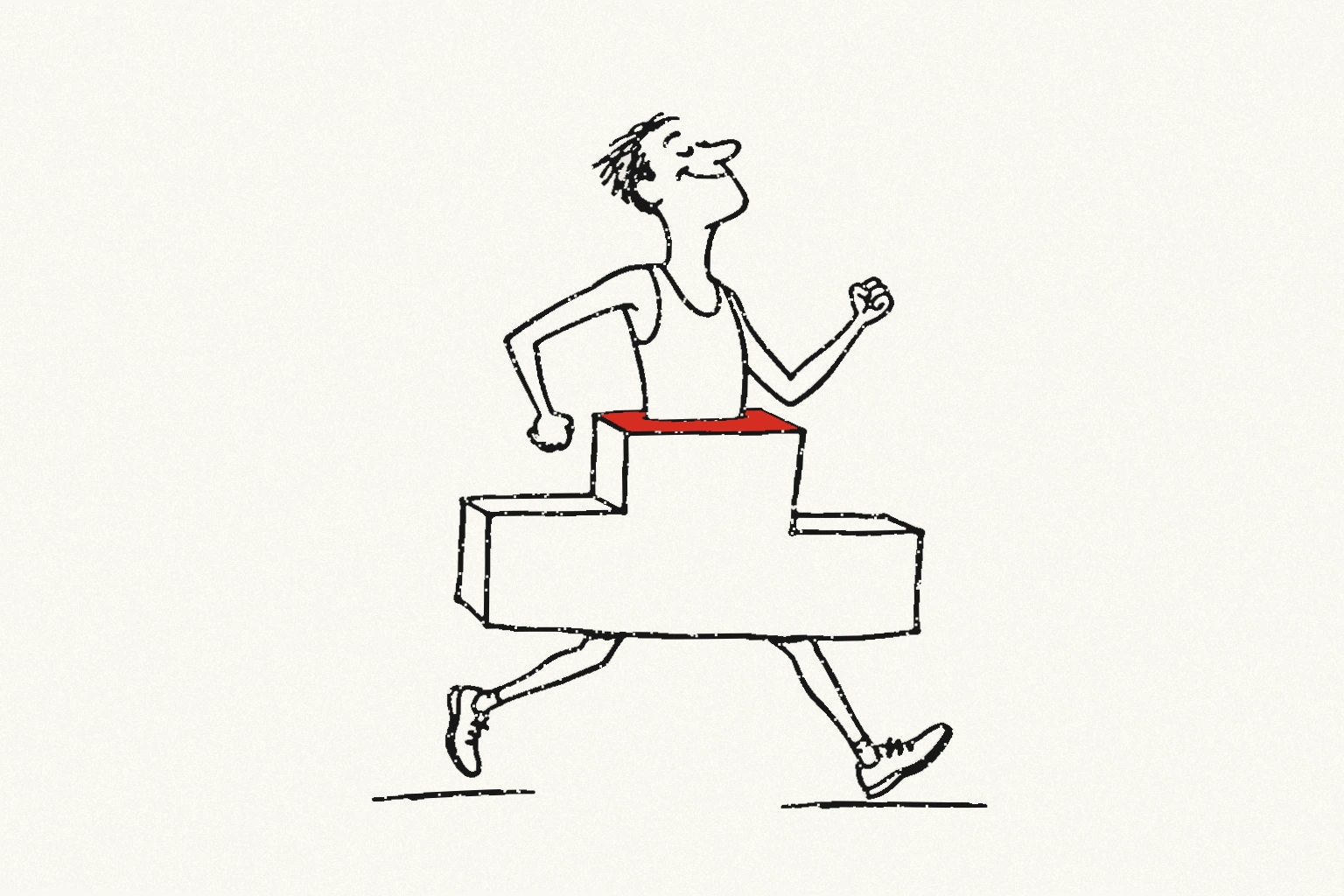
A runner wears a three-step winners' podium around his waist; his legs run beneath it and the red top step surrounds his torso.
A league of his ownWRYCUT
SHORT FORMS · II

From a well-appointed life

Original WRYCUT satire. Dialogues and notices are editorial fiction, not authentic quotations.

Miniature · fiction

Tidiness

She arranged the books by the colour of their spines.
Once Dostoevsky matched the curtains, he gave her no trouble.

Dialogue · fiction

The view

“Does the room have a sea view?”
“Yes.”

“Where is the sea?”

“Behind the hotel with the sea-view rooms.”

Unrhymed epigram · fiction

The hedge

They trimmed the hedge to get to know the neighbours.
A week later, they started feeding it.

Dialogue · fiction

A good vintage

“Can you detect a note of blackcurrant?”
“I can now.”

“And before?”

“Before, I had an opinion of my own.”

Miniature · fiction

Course results

After his language course, he corrected three mistakes on the menu.
The waiter returned an hour later. He still couldn’t order lunch.

Domestic note · fiction

In a good light

He switched off the light to save energy.
Then turned on three lamps for the photograph.

Notice · fiction

A discreet neighbourhood

Flat in a very discreet neighbourhood. The neighbours know everything, but only tell each other.

A soaked presenter holds a board with a red sun over his head and confidently points to it while rain falls from a black cloud.
Sheltered by the forecastWRYCUT
LAST PAGE · NO COMMENT

Self-service

End of issue. Someone else may have the last word.